Best Uses of Digital Technology in Daily Life You Should Know
Published: 29 Mar 2026
Many people use digital tools every day but still wonder about the real uses of digital technology. They may struggle to see how technology helps education, business, healthcare, communication, and other areas.
This lack of clarity makes digital systems seem hard to trust or even harder to use well. When people cannot see where technology fits, they often ignore useful tools and miss better choices.
This blog post solves that problem by explaining the main uses of digital technology in simple words, so the topic feels clear and practical.
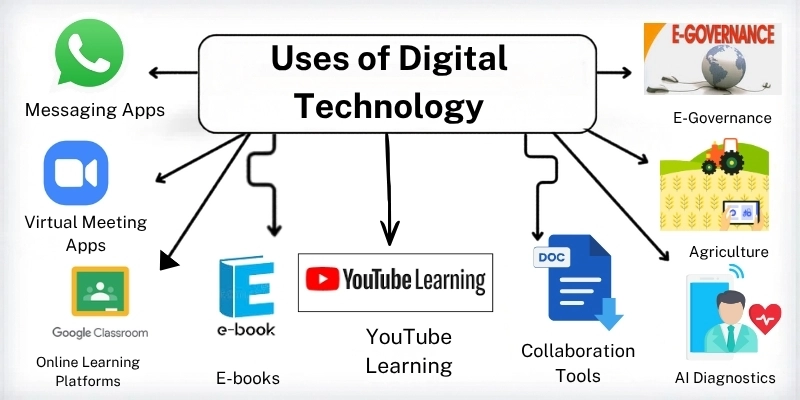
Major Uses of Digital Technology
Digital technology plays a big role in our daily life. We use it at home, in school, at work, and even in hospitals. Below are the most searched uses of digital technology that shape our modern world.
1. Uses of Digital Technology in Communication
Digital technology has changed the way people talk and stay connected. Today, a message can travel across the world in seconds. Distance no longer feels like a wall between people.
Communication is now faster, easier, and more flexible. From family chats to work meetings, digital tools help people stay in touch in everyday life.
1. Social Media
Social media platforms like Facebook, Instagram, and X help people share ideas, photos, videos, and news. Friends and family can stay connected even when they live in different countries.
Businesses also use social media to speak with customers, answer questions, and share updates. It has turned communication into a two-way street instead of a one-sided message.
Still, social media has its weak side. Too much screen time can reduce face-to-face contact, and some people feel pressure when they compare their lives with others online.
2. Messaging Apps
Messaging apps like WhatsApp and Telegram make instant communication simple. People can send text messages, voice notes, images, videos, and documents within seconds.
Students use these apps for study groups and class updates. Work teams use them to share quick information and stay on the same page.
This improves speed and teamwork. But nonstop notifications can break focus and make it hard to concentrate.
3. Virtual Meetings
Virtual meeting tools like Zoom and Google Meet help people talk face to face without being in the same room. Companies use them for remote work, schools use them for online classes, and doctors use them for telemedicine.
These tools save travel time and lower costs. They also make it easier for people in different cities or countries to work together.
4. Global Connectivity
Digital networks connect people across the world. A student in one country can learn from a teacher in another, and a business can speak to customers from many places at once.
This supports learning, trade, and cultural exchange. It opens doors that once felt far away.
Digital technology has made communication faster and wider than ever before. But like a fast car, it works best when used with care and control.
2. Uses of Digital Technology in Education
Digital technology has changed how students learn. Today, learning is no longer tied to one classroom, one teacher, or one fixed time. A student can study from home, on a bus, or during a free hour in the evening.
1. Online Learning Platforms
Online learning platforms like Coursera and Google Classroom give students lessons, quizzes, and homework in one place. Students can learn at their own pace and go back to a lesson when they need it again.
This helps people who need flexible study time. It also helps teachers keep track of student progress without piles of paper.
2. Learning Management Systems (LMS)
A learning management system, or LMS, helps schools run courses online. It stores class notes, homework, grades, and records in one simple system.
This keeps learning tidy and easy to manage. It’s like having a school bag, notebook, and report card all inside one screen.
3. E-books
E-books let students read digital books on phones, tablets, or computers. They are easier to carry than heavy printed books and often cost less.
Students can also search for a word or topic in seconds. That saves time and makes revision easier.
4. Research Databases
Research databases give students access to trusted articles, journals, and study papers. These sources help students find stronger information for assignments and projects.
This builds better research habits. It also helps students think carefully instead of copying weak information from random websites.
5. YouTube Learning
Many students use YouTube to understand hard topics. Teachers and subject experts post free lessons on math, science, coding, and many other subjects.
Videos can make a confusing lesson feel simple. Sometimes one clear video explains more than a full page of notes.
Digital technology has made learning more open and more flexible. Still, students need the right guidance, trusted sources, and good study habits to get the best results.
3. Uses of Digital Technology in Business and the Workplace
Digital technology helps businesses save time, reduce mistakes, and keep work moving. It also makes it easier for teams to stay connected and finish tasks on time.
For many business owners, the biggest worry is not the tool itself. It’s whether the tool is easy to use, worth the money, and clear enough for the team to follow.
1. Remote Work
Remote work tools like Zoom, Slack, and Microsoft Teams help employees work from home while staying in touch. Meetings, updates, and file sharing can all happen online.
This gives workers more flexibility. It also helps companies keep work going even when people are in different places.
2. Automation Software
Automation software handles repeated tasks like sending emails, processing payroll, or checking stock. This cuts down manual work and lowers the chance of human error.
It’s like setting a clock instead of ringing the bell yourself every hour. The task still gets done, but with less stress.
3. Data Analytics
Data analytics means looking at data to make better choices. Businesses study customer habits, sales patterns, and market demand to see what’s working and what’s not.
This helps managers plan with facts instead of guesswork. Good data can stop a business from throwing money at the wrong problem.
4. Collaboration Tools
Tools like Google Docs and Trello help teams work together in real time. Team members can edit files, assign jobs, and track progress without long email chains.
This makes teamwork faster and clearer. Everyone can see what needs to be done and who is doing it.
Digital tools help workplaces run with more order and less wasted time. But companies still need clear setup, staff training, and a simple view of costs before choosing any system.
4. Uses of Digital Technology in Healthcare
Digital technology plays a key role in healthcare. It helps doctors work faster, supports better patient care, and can even save lives in urgent cases.
In healthcare, speed matters. But trust matters too, especially when patient records and private data are involved.
1. AI Diagnostics
Artificial intelligence helps doctors spot some health problems earlier. It can study X-rays, scans, and reports to find signs that may need closer review.
This supports faster diagnosis. It also gives doctors extra help when checking large amounts of medical information.
2. Patient Monitoring
Digital monitoring devices track heart rate, blood pressure, oxygen levels, and other health signs. Some devices send live updates straight to hospitals or clinics.
This helps doctors act quickly when a patient’s condition changes. In serious cases, a few minutes can make a big difference.
3. Emergency Systems
Hospitals use digital emergency systems to manage ambulances, patient details, and urgent care records. Fast data sharing helps medical teams prepare before the patient even arrives.
This saves time during critical moments. It helps staff make quicker and better choices when pressure is high.
4. Telemedicine
Telemedicine allows patients to speak with doctors through video calls or online systems. This is very useful for people who live far from clinics or have trouble traveling.
It brings medical advice closer to the patient. For many families, it saves both time and travel costs.
Digital technology has made healthcare more connected and more responsive. Still, medical systems must stay secure, accurate, and easy for both staff and patients to use.
5. Uses of Digital Technology in Government and Smart Cities
Digital technology helps governments serve people in faster and simpler ways. It also helps cities run better by using real-time data and connected systems.
Many websites explain this badly. They make it sound dry or too technical, even though it affects daily life in ways people can see and feel.
1. E-Governance
E-governance means government services are available online. People can pay taxes, apply for licenses, submit forms, and check records through websites or apps.
This saves time and cuts paperwork. It also reduces long lines and makes public services easier to reach.
2. Digital Identity
Many countries now use digital identity systems. These systems store personal details in electronic form so citizens can access services like banking, healthcare, and government portals.
This improves security and helps reduce fraud. But the data must be protected well, because private information should never be treated lightly.
3. Smart Traffic Systems
Smart cities use sensors, cameras, and digital systems to manage traffic. Traffic lights can change based on road conditions and vehicle flow.
This helps reduce traffic jams and saves fuel. It also makes roads work more smoothly during busy hours.
4. Public Safety Monitoring
Governments use digital monitoring systems to support public safety. Emergency teams can receive alerts quickly and respond faster when problems appear.
This can help during accidents, fires, or security issues. Quick information often leads to quick action.
Digital technology can make cities smarter, faster, and safer. But public trust depends on privacy, data protection, and fair use of these systems.
6. Uses of Digital Technology in Agriculture and the Environment
Digital technology is also helping farms and natural resources. It gives farmers better control over crops, water, and weather conditions.
This area may get less attention than social media or online shopping. Still, it’s one of the most useful parts of digital technology because it supports food production and resource care.
1. Precision Farming
Precision farming uses digital tools to help farmers grow crops in a smarter way. Sensors and GPS systems help check soil condition, crop health, and field needs.
This helps farmers use the right amount of water, fertilizer, and treatment. In farming, that can mean lower waste and better results.
2. Climate Monitoring
Digital systems track weather and climate conditions. Farmers can receive alerts about storms, rain, heat, or sudden temperature changes.
This helps them plan planting and harvesting at the right time. It’s like having a weather eye open all day and night.
3. Satellite Data
Satellites collect images and data from land and crop areas. Farmers and experts use this information to spot dry patches, weak growth, or possible disease.
This helps fix problems early. Early action often means less crop loss and better quality at harvest time.
4. Water Management Systems
Smart irrigation systems control water use based on real need. They supply water only when crops need it, instead of watering everything the same way.
This saves water and protects natural resources. It also helps farmers lower costs in places where water is limited.
Digital technology is making farming more careful and more efficient. It helps produce more food with fewer wasted resources, which is good for both farmers and the environment.
Advantages and Disadvantages of Digital Technology
Digital technology brings many benefits. But it also has some risks. We must understand both sides to use it wisely.
| Advantages | Disadvantages |
|---|---|
| Faster communication | Privacy risks |
| Increased productivity | Cybersecurity threats |
| Easy access to information | Screen addiction |
| Automation efficiency | Job displacement |
Real-Life Mini Case Study
Real examples make digital technology easier to understand. Let’s look at a simple case.
How Telemedicine Reduced the Rural Healthcare Gap
In many rural areas, people live far from hospitals. Travel takes time and money.
Telemedicine solved this problem. Patients booked online appointments and talked to doctors through video calls. Doctors reviewed reports and gave advice remotely.
As a result:
- Patients received faster care
- Travel costs decreased
- Hospitals reduced overcrowding
Telemedicine improved healthcare access without building new hospitals.
Conclusion
So guys, in this article, we’ve covered the uses of Digital Technology in detail. You can now see that digital technology is not limited to phones or computers, because it supports learning, payments, farming, public services, and much more.
My personal recommendation is to first understand the purpose of a digital tool before adding it to your routine. That way, you avoid confusion and get real value from it.
If this guide helped you, share it with others and keep exploring how technology can improve daily life.
FAQ
Here are some common questions about the uses of digital technology in different fields, answered in a simple and direct way.
Digital technology helps school students learn, research, communicate, and develop practical skills.
It facilitates online courses, electronic assignments, instructional videos and interactive learning resources. Digital technology also allows students to find information, complete group work, improve other skills such as typing, presentations and basic computer use.
Digital technology in construction is mainly used for design, project management, site monitoring, communication, and safety.
It assists teams to develop the plans of building, control the development of work, costs, dates, and immediate updates teams, and improve the safety of workers by using digital devices, drones, sensors, and project software.
The 5 main uses of digital technology in heritage projects are digital documentation, 3D modeling, virtual tours, restoration planning, and public awareness.
Experts use digital tools to record historical sites, build 3D models, plan repairs, and protect cultural assets. These tools also help museums and heritage teams share history with the public through websites, apps, and online tours.
Digital technology in physical education teacher education is used for video analysis, online learning, fitness tracking, lesson planning, and feedback.
It assists the trainee teacher to learn how to perform movements, acquire methods of teaching, monitor physical performances, experts in preparing lessons, and obtain feedback more swiftly and efficiently through trainers.
The top 5 ways of using digital technology in the adoption processes are online applications, digital record management, background checks, communication, and case tracking.
It helps families and agencies submit forms, store documents safely, verify information, stay connected through digital platforms, and track adoption progress in a more organized way.


- Be Respectful
- Stay Relevant
- Stay Positive
- True Feedback
- Encourage Discussion
- Avoid Spamming
- No Fake News
- Don't Copy-Paste
- No Personal Attacks
- Be Respectful
- Stay Relevant
- Stay Positive
- True Feedback
- Encourage Discussion
- Avoid Spamming
- No Fake News
- Don't Copy-Paste
- No Personal Attacks
