10 Disadvantages of Technology in Daily Life With Examples
Published: 2 Sep 2026
Technology has revolutionized almost every area of our lives, from communication to healthcare. But, like every instrument, it has drawbacks. While innovations in technology make things simpler, we cannot ignore the drawbacks that affect our daily lives.
From the difficulties of technology in the classroom to technological disadvantages in workplaces, these challenges are becoming more visible.
The real challenge is how much we rely on technology, often without considering its drawbacks. This can lead to problems like health issues, social disconnection, and even job loss due to industrialization.
In this article, we’ll discuss the disadvantages of technology and offer practical advice on how to deal with its negative effects. Understanding these drawbacks helps you use technology wisely and avoid the negative side.
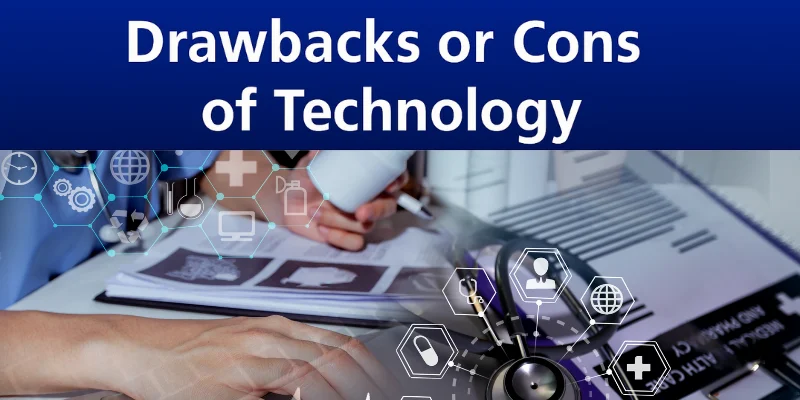
Common Disadvantages of Technology at a Glance
The table below highlights the major disadvantages of technology and how they can affect everyday life.
| Disadvantage | Impact |
|---|---|
| Privacy & Security Risks | Data breaches and cyber threats |
| Technology Addiction | Reduced focus and productivity |
| Mental Health Issues | Stress, anxiety, and digital fatigue |
| Reduced Social Interaction | Less face-to-face communication |
| Education Challenges | Distractions and unequal access |
| Health Problems | Eye strain and reduced activity |
| Job Displacement | Automation changes employment |
| Environmental Impact | E-waste and energy consumption |
| Overdependence on Technology | Loss of some basic skills |
| Workplace Stress | Pressure and burnout |
Most Common Disadvantages of Technology
While technology has improved many areas of modern life, excessive use and dependence on digital tools can create several challenges. The following disadvantages highlight how technology can affect personal health, privacy, education, society, and the workplace.
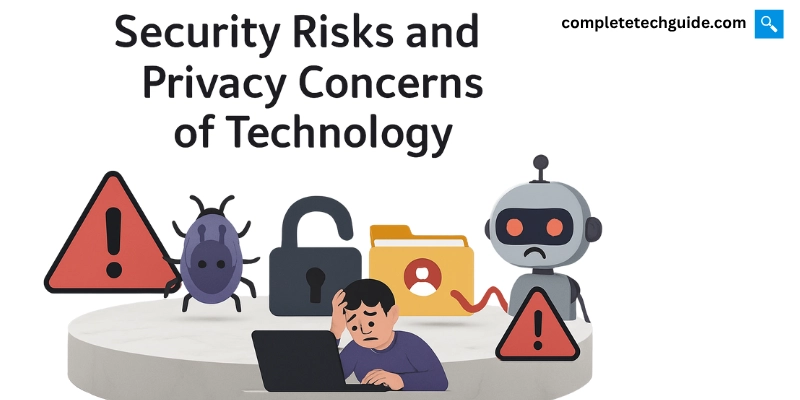
1. Privacy and Security Risks of Technology
As more personal, financial, and professional activities move online, privacy and security have become major concerns. Technology allows people to store and share information easily, but it also increases the risk of cyberattacks, data breaches, and unauthorized access to personal information.
Some common privacy and security risks include:
- Data Breaches: Hackers can access sensitive information stored by companies, websites, and online platforms.
- Identity Theft: Criminals may misuse stolen personal details for fraudulent activities.
- Online Privacy Concerns: Many digital services collect user data, which raises concerns about how personal information is stored and used.
Example: Online banking makes financial transactions easier, but users must follow security practices such as using strong passwords and avoiding suspicious links to protect their accounts.
2. Technology Addiction and Excessive Screen Time
One of the major disadvantages of modern technology is excessive dependence on digital devices. Smartphones, social media platforms, video games, and online entertainment can consume significant amounts of time when not used responsibly.
Excessive technology use may lead to:
- Reduced productivity
- Difficulty focusing on important tasks
- Less time for physical activities
- Poor sleeping habits
- Dependence on digital entertainment
Example: A person spending several hours daily on social media may have less time for exercise, learning, or personal relationships.
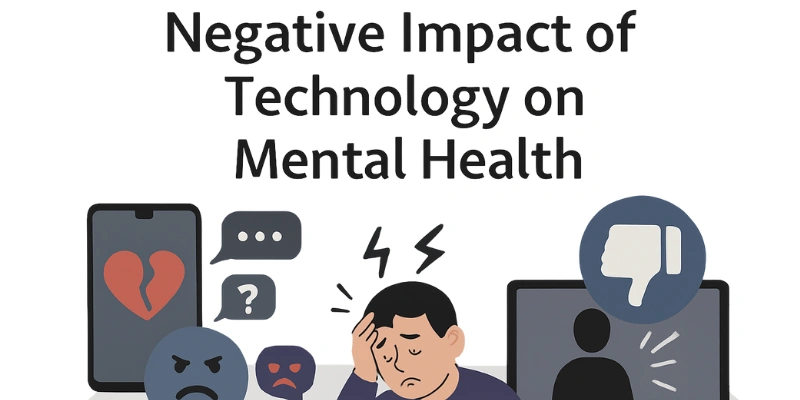
3. Negative Effects of Technology on Mental Health
Although technology helps people stay connected, excessive digital usage can negatively affect mental well-being. Constant notifications, online comparisons, and pressure to remain connected can increase stress and emotional fatigue.
Some possible mental health effects include:
- Digital Stress: Continuous online activity can make it difficult to relax and disconnect.
- Social Comparison: Social media may encourage people to compare their lives with others.
- Reduced Focus: Frequent digital interruptions can make concentration more difficult.
Example: Spending too much time comparing yourself with others on social media platforms may negatively affect confidence and emotional well-being.
4. Reduced Face-to-Face Interaction
Technology has made communication faster through messaging apps, social media, and video calls. However, excessive reliance on digital communication can reduce the quality of face-to-face interactions.
Some disadvantages include:
- Less Personal Communication: People may prefer texting instead of meeting or talking directly.
- Misunderstandings: Text-based communication often lacks facial expressions and body language.
- Social Isolation: Excessive device use can reduce meaningful offline relationships.
Example: A group of friends sitting together while focusing on their smartphones may communicate less despite being physically present.
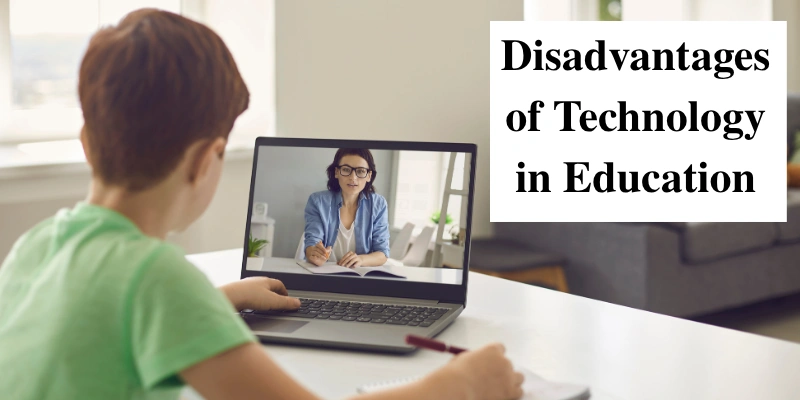
5. Disadvantages of Technology in Education
Technology has improved access to educational resources, but it also creates challenges for students and teachers. Excessive dependence on digital learning tools can affect attention, engagement, and learning habits.
Common disadvantages of technology in education include:
- Classroom Distractions: Smartphones, laptops, and online platforms can distract students during learning.
- Reduced Engagement: Students may rely too much on digital resources instead of developing independent learning skills.
- Digital Inequality: Not all students have equal access to devices and reliable internet.
Example: Students with limited access to computers or internet connections may struggle to complete online assignments compared to students with better resources.
6. Health Problems Caused by Excessive Technology Use
Technology improves many aspects of life, but excessive use of digital devices can create physical health challenges. Spending long hours using computers, smartphones, and other devices may affect overall well-being.
Common health problems include:
- Eye Strain: Long periods of screen use can cause tired or dry eyes.
- Poor Posture: Incorrect sitting positions while using computers may lead to neck and back discomfort.
- Reduced Physical Activity: Too much screen time may reduce exercise and movement.
Example: A person who works on a computer for many hours without breaks may experience eye fatigue and muscle discomfort.
7. Job Displacement Due to Automation
Automation and artificial intelligence have improved efficiency in many industries, but they have also created concerns about employment changes. Some repetitive tasks can now be completed by machines and software, reducing the need for certain roles.
Common workplace concerns include:
- Replacement of Some Jobs: Machines can perform certain repetitive tasks faster and more efficiently.
- Need for New Skills: Workers may need additional training to adapt to changing technology.
- Employment Uncertainty: Some industries experience job changes as automation increases.
Example: Automated checkout systems in stores can reduce the need for some cashier positions while increasing demand for technology-related skills.
8. Environmental Impact of Technology
Technology provides many benefits, but producing, using, and disposing of electronic devices can create environmental challenges.
Some environmental disadvantages include:
- Electronic Waste (E-Waste): Old phones, computers, and batteries can create waste when not recycled properly.
- Energy Consumption: Data centers and electronic devices require significant energy to operate.
- Resource Usage: Manufacturing technology products requires raw materials and natural resources.
Example: Improper disposal of old electronic devices can release harmful materials and contribute to environmental pollution.
9. Overdependence on Technology in Daily Life
Technology makes many daily tasks easier, but excessive dependence on digital tools can reduce people’s ability to perform certain activities independently.
Examples of overdependence include:
- Relying completely on GPS instead of learning navigation skills.
- Using digital tools for simple tasks without developing basic abilities.
- Depending on devices for reminders and information storage.
Example: Someone who always uses navigation apps may find it difficult to remember routes or travel without digital assistance.
10. Disadvantages of Technology in the Workplace
Technology has improved workplace productivity, but it has also introduced new challenges for employees. Constant connectivity and digital demands can increase pressure and make it difficult to maintain work-life balance.
Common workplace disadvantages include:
- Workplace Stress: Employees may feel pressure to respond to messages outside working hours.
- Information Overload: Too many emails, notifications, and digital tasks can increase stress.
- Continuous Adaptation: Workers often need to learn new systems and technologies.
Example: An employee who receives work notifications late at night may find it difficult to separate professional responsibilities from personal time.
Technology itself is not harmful. The negative effects usually occur when technology is overused, poorly managed, or used without proper awareness of privacy, security, and digital balance.
When used responsibly, technology can improve communication, education, healthcare, and productivity while reducing many of its potential disadvantages.
The key is finding a healthy balance between using digital tools and maintaining real-world skills and relationships.
Actionable Tips to Reduce the Disadvantages of Technology
Here are some recommendations to avoid the negative sides of technology.
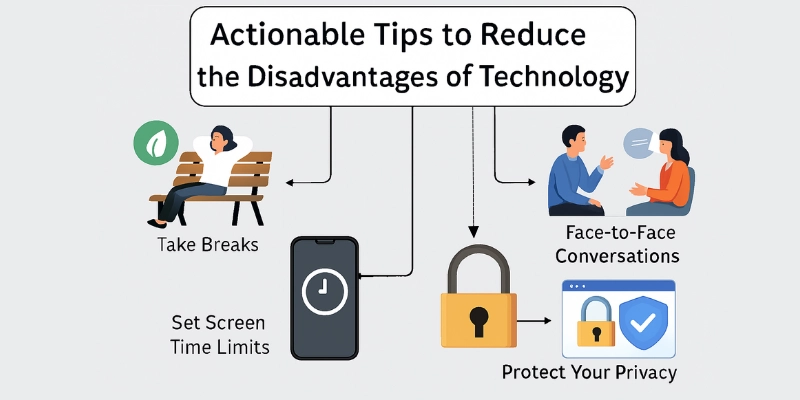
- Take Breaks – Don’t stay on screens for too long. Take a few minutes to rest your eyes and stretch your muscles.
- Set Screen Time Limits – Use apps that track your screen time to avoid excessive use of cell phones and laptops.
- Face-to-Face Conversations – Make an effort to speak with friends and relatives in person instead of talking on your phones.
- Protect Your Privacy – Use strong passwords and exercise caution when sharing personal information online.
Conclusion
Technology has transformed modern life by improving communication, education, healthcare, and productivity. However, it also comes with challenges that should not be ignored. Privacy concerns, cybersecurity threats, health issues, job displacement, environmental problems, and overdependence are some of the major disadvantages of technology.
The goal is not to avoid technology completely but to use it wisely. By maintaining a healthy balance between digital tools and real-world activities, people can enjoy the benefits of technology while reducing its negative effects.
Questions About Technology’s Disadvantages
The main disadvantages of technology in everyday life include health problems associated with excessive screen time, reduced social interaction and increased obsession with digital devices.
Yes, some cons of technology in healthcare include data security concerns, privacy issues, and a lack of personal interaction between doctors and patients.
To minimize the harmful effects of technology, the school’s administration should monitor the screen time of laptops and mobile phones during lectures, promote interactive activities and keep students engaged in conventional learning methods.
Yes, the overuse of technology in the classroom may cause health issues, deviations from achieving their goals and a lack of social engagement.
The negative effects of technology can be reduced by limiting screen time, protecting personal information, maintaining offline relationships, learning digital safety practices, and using technology responsibly.
The disadvantages of technology in society include increased dependence on digital systems, reduced personal interaction, job changes caused by automation, privacy concerns, and unequal access to technology.




- Be Respectful
- Stay Relevant
- Stay Positive
- True Feedback
- Encourage Discussion
- Avoid Spamming
- No Fake News
- Don't Copy-Paste
- No Personal Attacks
- Be Respectful
- Stay Relevant
- Stay Positive
- True Feedback
- Encourage Discussion
- Avoid Spamming
- No Fake News
- Don't Copy-Paste
- No Personal Attacks
