How Technology is Revolutionizing the Entertainment Industry in 2025
Published: 11 Sep 2025
Technology in the Entertainment Industry plays a crucial role in the creation, distribution, and viewing of movies, music, and gaming content. Streaming platforms like Netflix and Spotify allow users to access content anytime, anywhere.
Artificial Intelligence (AI) helps create better visuals and stories faster. Virtual Reality (VR) makes experiences feel more real, and 5G is making it all faster.
The entertainment sector is predicted to evolve as technology continues to advance. AI, blockchain, and 5G innovations will contribute to the development of new ways to consume and engage with entertainment. The future is bright due to technology!
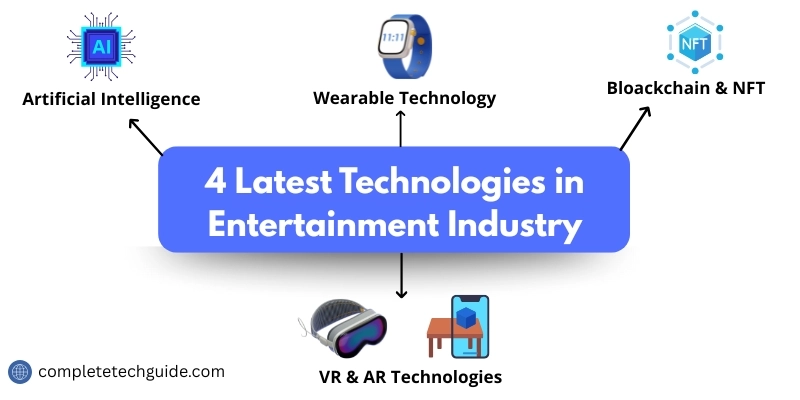
Technologies Reshaping the Entertainment Industry
Here, we’ll discuss some roles of the latest technology in the entertainment industry. There are many fields in the entertainment sector where we utilize technology to perform various tasks, from content creation to video editing.
Let’s discuss the Four of them in detail.
1. Artificial Intelligence (AI)
AI is changing the entertainment industry in many exciting ways. It’s helping creators make content faster and more personalized.
- Content Creation: AI streamlines activities such as video editing, color grading, and sound design. AI-powered tools such as Adobe Sensei accelerate previously time-consuming activities.
Example: AI can help create lifelike animations or music, making it quicker for creators to bring ideas to life.
- Personalization: AI can also assist individuals in finding content they’ll enjoy. Netflix and Spotify employ artificial intelligence to propose movies, series, and music based on your preferences and previous viewing or listening history.
Example: If you watch a lot of action movies on Netflix, AI will suggest more films in that genre.
- Content Generation: AI tools, such as OpenAI’s GPT-3, are also helping to generate new content. This involves writing screenplays, making music, and creating artwork.
Example: AI can generate a short story, a song, or even help design a new video game character.
2. Virtual Reality (VR) and Augmented Reality (AR)
VR and AR make entertainment more engaging and realistic. These advanced entertainment technologies are revolutionizing the way we experience games, live events, and storytelling.
- Gaming: VR is altering the way we play games. Games like Beat Saber and Alyx from Half-Life enable users to immerse themselves in virtual environments and interact with them in real-time.
Example: Wearing a VR headset allows you to combat monsters and explore new areas, giving you the illusion that you are genuinely in the game.
- Live Events: AR and VR also improve the experience of attending live events. For example, the Travis Scott VR performance in Fortnite allowed fans to simulate a real event using VR and AR features.
Example: Instead of viewing a concert on TV, you may attend a virtual one with your friends and view the event in 3D.
- Storytelling: VR and AR are transforming the way stories are told. Now, viewers can be part of the story and explore virtual worlds.
Example: You may engage with the characters in Star Wars: Trials on Tatooine and engage yourself in the Star Wars world.
3. Blockchain and NFTs Technology in Entertainment Industry
Blockchain and NFTs provide creators with greater control over their work and the means to profit from it. These technologies help to keep payments secure and accessible.
- Blockchain in Entertainment: Blockchain helps to secure creators’ rights. It enables them to share their information safely while also ensuring they are paid fairly.
Example: Musicians may now sell their music directly to fans using blockchain technology, removing the need for a record company.
- NFTs: NFTs are unique digital objects that producers may resell to fans. These exceptional assets might include a variety of stuff, such as art, music, and films.
Example: Artist Beeple made history by selling a digital art piece as an NFT for $69 million.
4. Wearable Technology
Wearable technology is adding a new level of interactivity to entertainment. Devices like smartwatches, fitness trackers, and special gloves are making experiences more personal and exciting.
- Haptic Feedback Devices: Wearables such as haptic suits and gloves enable users to experience feelings in virtual surroundings.
Example: Devices such as the Tesla Suit and HaptX Gloves recreate the sense of handling things or feeling hits in VR games, making the experience more immersive.
- Fitness and Interactive Entertainment: Wearable technologies are also making exercise more enjoyable. Platforms like Peloton and Zwift utilize wearables to track performance and create immersive virtual exercise experiences.
Example: These platforms allow you to participate in virtual races or join live workouts, making exercise more engaging.
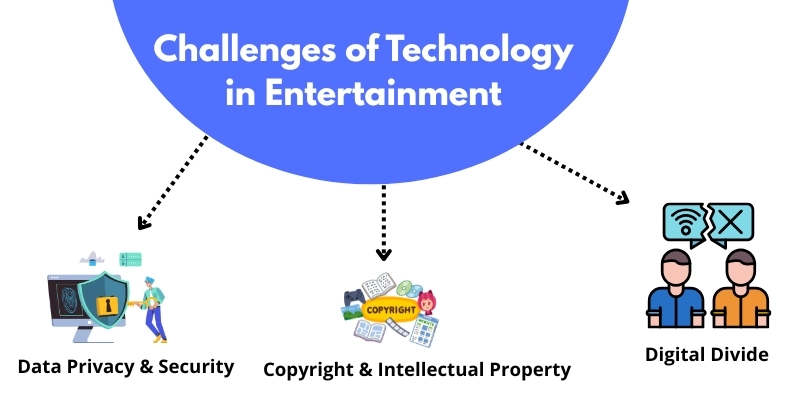
Advantages and Disadvantages of technology in Entertainment
Technology in the entertainment industry has changed how we create, consume, and interact with media. While it brings numerous benefits, it also offers challenges.
Let’s explore the advantages and disadvantages of technology in the entertainment industry.
| Advantages of Technology in Entertainment |
|---|
|
| Disadvantages of Technology in Entertainment |
|---|
|
Future Trends and Innovations in the Entertainment Industry
As we look ahead, emerging technologies such as 5G and AI advancements will continue to redefine the entertainment industry, opening up new possibilities for both creators and consumers.
1. 5G Technology
The adoption of 5G networks promises to deliver faster internet speeds, shorter delay times, and more consistent connections, transforming how people consume entertainment content.
With 5G, streaming high-definition content without buffering will become the standard, enabling seamless entertainment experiences to thrive.
2. AI Advancements
Artificial intelligence will continue to play a significant role in shaping the future of entertainment. AI may soon assist in generating scripts, creating lifelike avatars, and even producing content entirely.
Advancements in AI-driven content production and customization will enable artists to create personalized, highly engaging material that connects with specific audiences on a deeper level.
3. Convergence with Education and Healthcare
Entertainment technology is expected to become increasingly integrated with other industries, such as education and healthcare. AR and VR technologies are already being utilized in educational settings to enhance learning experiences, making subjects like history, science, and geography more engaging and interactive.
Conclusion
The transformative role of technology in entertainment is clear, and the possibilities are only expanding. From AI and VR to blockchain and wearables, technological advancements are continually reshaping the entertainment landscape.
While concerns regarding privacy, copyright, and accessibility persist, modern entertainment technology has incredible potential for creating more immersive, engaging, and individualized experiences.
As the industry evolves, adopting these latest entertainment technologies will result in a richer and more dynamic entertainment experience for both artists and fans.
Questions about technology in Entertainment industry
Here are some FAQs about the role of technology in the entertainment industry.
Technology is transforming the entertainment industry by improving content development, sales, and consumption. It enables producers to create high-quality media more quickly and affordably, while viewers can easily benefit from individualized experiences on platforms such as Netflix and Spotify.
AI, VR, AR, blockchain, and 5G networks are examples of new entertainment technology. These technologies are changing video gaming, multimedia creation, and broadcasting by increasing engagement and efficiency.
Technology is used in entertainment to simplify content creation, improve viewer experiences, and enable on-demand streaming.
For example, AI helps with video editing, while VR immerses users in video games and live events.
Smart Technology plays an important role in making entertainment more interactive and personalized.
Smart TVs, AI assistants and wearable technologies allow consumers to manage content, participate in video games, and have real-time experiences.
Information technology impacts entertainment by allowing the efficient storage, recovery, and streaming of digital content. It drives cloud-based services, improves data security, and enables real-time content distribution across worldwide platforms.
Technology is transforming entertainment streaming with faster internet speeds, better user interfaces, and AI-powered suggestions.
5G and cloud services allow users to enjoy high-quality content at any time and from any location.





- Be Respectful
- Stay Relevant
- Stay Positive
- True Feedback
- Encourage Discussion
- Avoid Spamming
- No Fake News
- Don't Copy-Paste
- No Personal Attacks
- Be Respectful
- Stay Relevant
- Stay Positive
- True Feedback
- Encourage Discussion
- Avoid Spamming
- No Fake News
- Don't Copy-Paste
- No Personal Attacks
