7 Shocking Pros and Cons of Information Technology Explained
Published: 5 Jan 2026
Today, information technology is present in every part of our lives. It is changing the way we work, communicate with each other, and obtain information. It has many benefits, such as speeding up communication, instant access to information, and connecting with people around the world.
But there are some disadvantages of information technology. Sometimes hackers steal people’s personal information, privacy is lost, online fraud occurs, and some tasks are taken over by machines, which affects people’s jobs.
This article provides a clear analysis of the benefits and drawbacks of information technology.
What is Information Technology?
Information technology, or IT, is the use of computers, the internet, and software for collecting, storing, processing, and distributing data. Simply said, IT enables us to generate, preserve, and share information rapidly and easily.
In our daily lives, we utilize information technology to send emails, take online classes, use mobile applications and search Google. IT improves work, facilitates collaboration, and provides access to information at any time.
Examples of Information Technology:
- Computers: Used in offices, schools, and homes to type documents, store data, and perform tasks.
- Internet & Software: The internet helps us connect with people worldwide, while software like MS Word, Zoom, and mobile apps help us work, learn, and communicate.
Information technology is a key part of modern life and is used in almost every area, like schools, businesses, hospitals, and how we talk to each other.
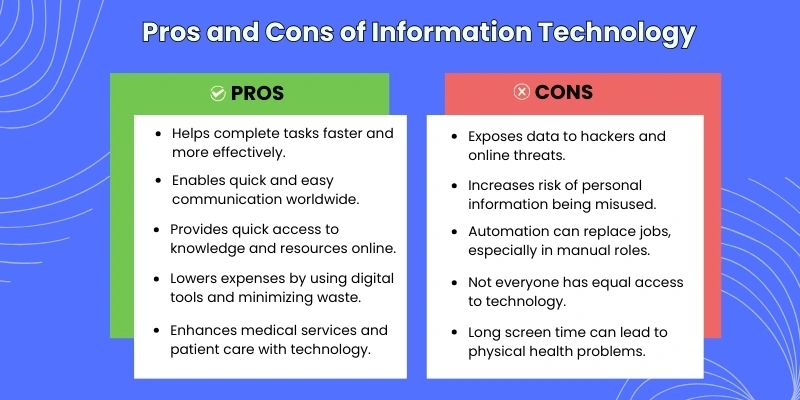
Advantages of Information Technology
Information Technology has many good points that help make our lives easier and quicker. Some of the main benefits are explained below in simple words.
1. Increased Efficiency and Productivity
Information technology helps us work faster and more easily. Computers and programs do many tasks for us. This saves time and helps people get more work done in offices, schools, and businesses.
2. Improved Communication
Communication has become much simpler and faster because of information technology. Email, video calls, and messaging applications allow us to communicate with individuals all over the world in just a couple of seconds.
3. Easy Access to Information
Information technology allows easy access to information through computers, the internet, and digital platforms. Students can learn online, and researchers can quickly find helpful data using the internet and online libraries.
4. Cost Reduction
Technology helps lower costs by making it easier to work without paper and organize online meetings. Companies spend less on paper, travel, and office costs by using digital tools.
5. Better Collaboration
People can work together even if they are in different places. Remote teams use online tools like Google Drive and project websites to share files and get work done together.
6. New Job Opportunities
Information technology has created many new tech jobs like software developers, data analysts, and cybersecurity experts. It also makes remote work possible, so people can work from home.
7. Improved Healthcare Services
In healthcare, technology helps doctors and hospitals keep track of patient records on computers and offer medical services online. Telemedicine helps patients talk to doctors via video call, which saves time and travel.
Disadvantages of Information Technology
Information technology has many benefits but it also has significant drawbacks. These challenges can negatively affect individuals, communities, and the environment if technology is not utilized carefully.
1. Cybersecurity Risks
Hackers can break into computers and online accounts. When this happens, people and businesses can lose personal and important information.
2. Privacy Issues
Many applications and websites collect user information. This may result in unauthorized data use and continuous tracking, which can cause individuals to worry about their personal privacy.
3. Job Displacement
Automation and robots have the potential to replace human workers in some industries. This may lead to unemployment, particularly among those with lower technical abilities.
4. Digital Divide
Digital technology is not equally accessible to all. This creates a gap between those with stable internet and devices and those lacking them.
5. Health Problems
Spending a lot of time in front of screens can make your eyes tired, hurt your back, and keep you away from enough physical activities. Over time, this can cause major health problems.
6. Social Isolation
Using technology too much means people reduce their personal interaction. They might spend more time online and less time with family and friends.
7. Environmental Impact
When electronic devices are thrown away, they turn into e-waste. If not recycled correctly, this causes pollution and damages the environment.
Advantages vs Disadvantages of Information Technology
The table below clearly compares the good and bad sides of information technology. This makes it easy for readers to see both points of view.
| Advantages | Disadvantages |
|---|---|
| Faster work with automation | Cybersecurity threats |
| Global communication | Privacy issues |
| Cost savings for businesses | Job loss due to automation |
| Easy access to information | Health problems from screen time |
This comparison shows that information technology is very helpful, but it should be used wisely and with care to avoid problems.
Impact of Information Technology in Daily Life
Information technology (IT) is a big part of our daily lives. It helps make many tasks easier and quicker, like learning, working, and talking to other people.
1. IT for Students
Students use information technology to access online classes, digital books, and educational videos. It allows individuals to learn from anywhere and conveniently access study materials across the internet.
2. IT in Businesses
Computers and technology are used in business to handle information, communicate with customers, and automate tasks. Online banking, digital payments, and computer software save time and make work easier and faster.
3. IT in Healthcare
In the healthcare sector, computers and technology help doctors store patient information and quickly share it with each other. Patients can also talk to a doctor online from home via mobile or computer, without having to go to the hospital.
4. IT in Communication
Information technology has made communication much faster and easier. People stay in touch with their family, friends, and work colleagues through email, social media, and messaging apps.
Overall, information technology has become an important part of our daily lives. It helps us in studies, business, treatment, and communication and gives us many benefits.
How to Reduce the Disadvantages of Information Technology
Although information technology has some disadvantages, these issues can be reduced if we use it wisely and responsibly.
1. Use Strong Passwords and Cybersecurity
We should always use strong passwords and change them regularly. Installing antivirus software and not clicking on unknown links keep our data safe from hacking and cyber attacks.
2. Limit Screen Time
Staring at a mobile or computer screen for long periods of time can be harmful to your health. Taking short breaks, exercising, and limiting screen time can help prevent eye strain and back pain.
3. Improve Digital Education
People should learn to use technology safely and correctly. Digital education teaches us about online risks and helps us use technology in a better way.
4. Use Data Responsibly
Personal and business information should be shared thoughtfully. Using secure and trusted apps and websites can help prevent information misuse and privacy issues.
5. Recycle Electronic Waste
Old electronic devices should be recycled properly. Recycling e-waste reduces pollution and keeps our environment safe.
By following these tips, we can enjoy the benefits of information technology and minimize its disadvantages.
Final Thought
Information Technology (IT) has changed the universe in many ways. It helps businesses grow, speed up communication, and connect people all around the world. While IT has made work easier and more efficient, it also presents challenges such as data safety, privacy protection and ensuring everyone can access technology easily.
While there are many advantages and disadvantages of information technology, its solutions are available with the right tools and rules. By using IT smartly and considering its risks, we can ensure technology continues to help us move forward, improve our lives, and create new opportunities for the people around us.
In the end, we learned that the good things about IT are much greater than the bad. As we move into the future, we must be careful and responsible in how we use technology.
Frequently Asked Questions (FAQs)
Below are some common questions related to information technology and their simple answers.
There are five major benefits of information technology. It speeds up communication, makes work easier and quicker, helps us find information easily, saves money, and helps us manage information securely.
With information technology, we can communicate instantly through email and messaging apps, a lot of work is done automatically, information is quickly available on the Internet, costs are reduced, and organizations keep their information secure.
These benefits of IT make our daily routines easier and more efficient.
There are five major disadvantages of information technology. It creates the risk of information stealing, some people’s jobs may be affected, health problems may arise, people may become overly dependent on technology and personal information is not safe.
Information technology can be good or bad, depending on how we use it.
If we use it correctly, it helps us work, communicate, and create new things but misuse can lead to information theft, loss of privacy, and health or social problems.
Information technology is important because it makes work faster and easier, connects people, and helps us access information.
It helps businesses, education, healthcare, and government work because it speeds up work, enables global communication, makes information easier to understand, and provides online convenience.


- Be Respectful
- Stay Relevant
- Stay Positive
- True Feedback
- Encourage Discussion
- Avoid Spamming
- No Fake News
- Don't Copy-Paste
- No Personal Attacks
- Be Respectful
- Stay Relevant
- Stay Positive
- True Feedback
- Encourage Discussion
- Avoid Spamming
- No Fake News
- Don't Copy-Paste
- No Personal Attacks
